If your trading setup still looks like it’s stuck in 2018, you’re leaving serious edge on the table. Today’s FX traders aren’t just “watching charts” — they’re running full-on tech stacks, blending AI, automation, and data like it’s a competitive sport.
This is your glow-up guide: the trading tools and trends everyone in forex is quietly upgrading to — and loudly flexing on social. Let’s break down what’s actually hot, what’s hype, and what’s worth plugging into your workflow.
1. AI-Assisted Charting: From “Gut Feeling” to “Pattern Sniper”
The days of manually scanning 20 pairs for that one clean setup are fading. AI-assisted charting tools are becoming the new co-pilot — not to replace you, but to filter the chaos into actual opportunities.
Modern platforms can:
- Auto-detect patterns (flags, wedges, double tops) in milliseconds
- Highlight key levels (support, resistance, liquidity zones)
- Rank setups by probability based on past behavior
- Flag volatility spikes or regime shifts before you feel them in your P/L
The real trend isn’t “fully automated AI trading.” It’s traders using AI as a scanner and idea engine, then applying human judgment for entries and risk. Think: “AI finds it, I decide if it’s tradable.”
Viral-ready angle: traders sharing side-by-side screenshots — their manual markup vs. the AI’s markup — and debating which is cleaner. Spoiler: the combo usually wins.
2. Workflow Dashboards: One Screen to Rule Your FX Universe
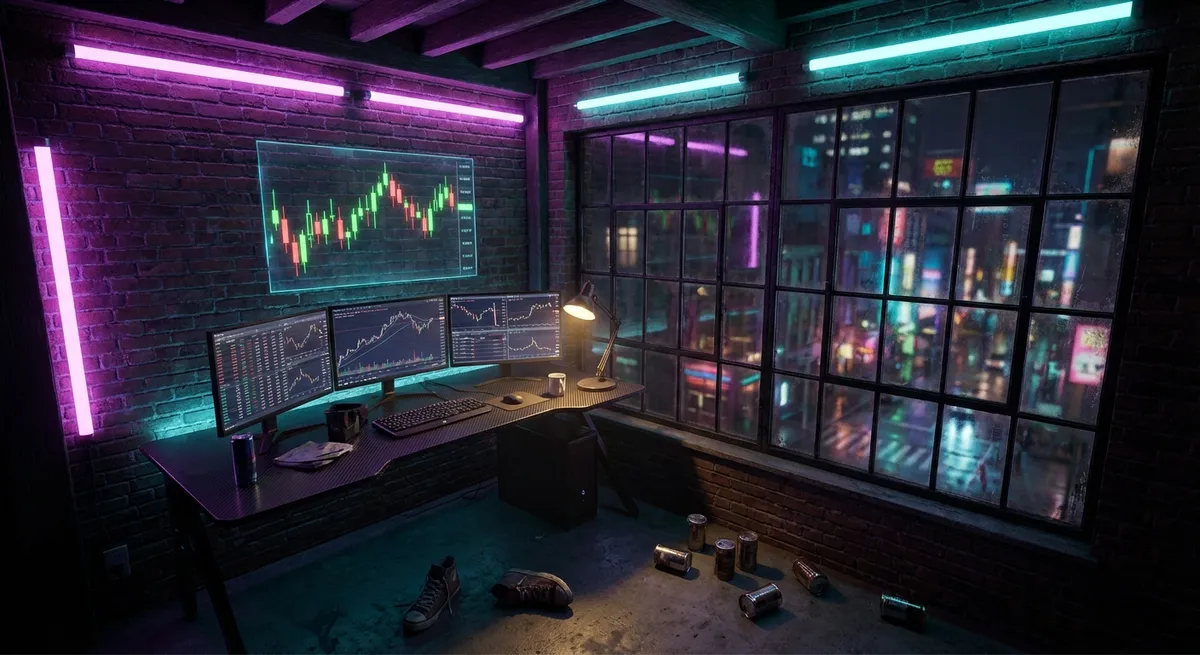
Trading used to be 10 tabs deep: charts, news, calendar, Twitter, order panel, journal… chaos. The cool kids are now building custom trading dashboards that pull everything into one clean interface.
What’s getting centralized:
- Live charts + order panel
- Macro calendars + key events countdown
- Watchlists with alerts and sentiment tags
- Positions, P/L, and risk exposure by pair and currency
- “What just moved?” heatmaps and volatility meters
The game-changer is context at a glance. When you can see your risk, news, and price action in one view, you stop overtrading random noise and start reacting only to what matters.
This is the stuff that screenshots are made of — clean, dark-mode dashboards with traders posting “Here’s my current FX cockpit” and everyone asking, “Bro, what are you using?”
3. Smart Alerts: From Notification Spam to Laser-Target Signals
Old-school alerts were basic: “Price touched X.”
New-school smart alerts are closer to “Ping me only if my entire idea is coming alive.”
Today’s alert tools let you stack conditions like:
- Price reaches a key level and
- Volume or volatility spikes and
- A technical indicator flips state (e.g., MA crossover, RSI break) and
- A macro event is not happening in the next hour
Instead of your phone exploding every 5 minutes, you get a handful of high-quality alerts that actually match your playbook.
Traders are sharing clips of their “alert recipe” setups: screenshots of conditional rules, then follow-up posts of “this alert fired, here’s the trade it triggered.” It’s not about more alerts — it’s about smarter filters.
4. Performance Analytics: Treating Your Trading Like a Sports Season
This is where serious traders are separating from the hobbyists. The flex now isn’t “I caught 300 pips on GBP/JPY” — it’s posting your monthly analytics and showing how you got them.
Modern performance tools break you down like an athlete:
- Win rate by pair, session, and day of week
- Average R-multiple (reward-to-risk) vs. your target
- Best and worst setups by pattern or strategy tag
- P/L impact of news trading vs. non-news environments
- Slippage, spread costs, and execution quality over time
The meta-shift: traders are realizing they don’t need more setups — they need to double down on what they already do best. The tools are exposing it, with brutal clarity.
Expect plenty of shareable graphs: equity curve glow-ups, “before vs. after risk tweak” charts, and people flexing, “Turns out I suck at Asian session. Fixed that. Results below.”
5. Community-Powered Tooling: Crowdsourced Edge Without the Noise
The internet is full of random indicators and untested scripts. The breakthrough trend is curated, community-powered tools — signals, templates, and bots that come with transparency and data, not just hype.
What traders are gravitating toward:
- Strategy templates with verified backtests and forward performance
- Indicator bundles where users share real trade examples, not just theory
- Public leaderboards for bots or scripts with clear drawdown and stats
- Collaborative workspaces where traders annotate the same charts in real time
The vibe is shifting from “one guru, many followers” to “shared toolbox, individual execution.” People are posting, “Here’s the template I grabbed from the community, here’s how I tweaked it, here’s my version after 3 weeks live.”
Edge isn’t just in the code — it’s in how fast you can discover, test, and adapt the collective tools.
Conclusion
The new flex in FX isn’t just calling tops and bottoms — it’s running a tight, tech-boosted operation that looks and feels pro.
AI-assisted charting filters out noise.
Dashboards give you control.
Smart alerts protect your focus.
Analytics turn your trading into a data-backed craft.
Community tools speed up your evolution.
You don’t need every shiny thing. You need a coherent stack that matches how you actually trade. Upgrade one layer at a time, share your setup, refine it with feedback — and watch your trading go from “just vibes” to “dialed-in system.”
Sources
- Bank for International Settlements – Triennial Central Bank Survey - Global data on FX market size, structure, and trends
- CFTC – Commitments of Traders Reports - Insight into positioning and market behavior from major participants
- Investopedia – Algorithmic Trading Overview - Background on how automation and algorithms are shaping modern trading tools
- MIT Sloan Management Review – How AI Is Changing Work - Context on AI-assisted decision-making relevant to AI-driven trading tools
- Babson College – Using Data Analytics to Improve Performance - Explains how performance analytics can enhance decision-making, applicable to trading performance tools
Key Takeaway
The most important thing to remember from this article is that this information can change how you think about Trading Tools.