If your trading screen still looks like it did in 2018, you’re leaving edge on the table. Forex has gone full “smart rig” mode—where tools aren’t just showing price, they’re predicting behavior, reacting faster than you can click, and turning raw data into tradeable storylines.
This isn’t about downloading 30 random indicators and hoping for the best. It’s about curating a tight toolkit that amplifies your edge, kills your FOMO, and makes your trading workflow feel like a pro-level command deck.
Let’s break down the trading-tool trends forex traders are quietly flexing—and loudly sharing.
1. Smart Dashboards: One Screen, Your Entire FX Universe
The era of 12 messy browser tabs is over. Traders are pivoting to custom dashboards that condense everything into a single, hyper-optimized view: charts, news, spreads, session opens, and even risk stats.
Modern platforms and add-ons now let you:
- Pin your top forex pairs with live spreads and volatility status
- Layer in macro calendars so you see NFP or CPI risk before you click buy
- Track open risk by pair, session, or strategy in real time
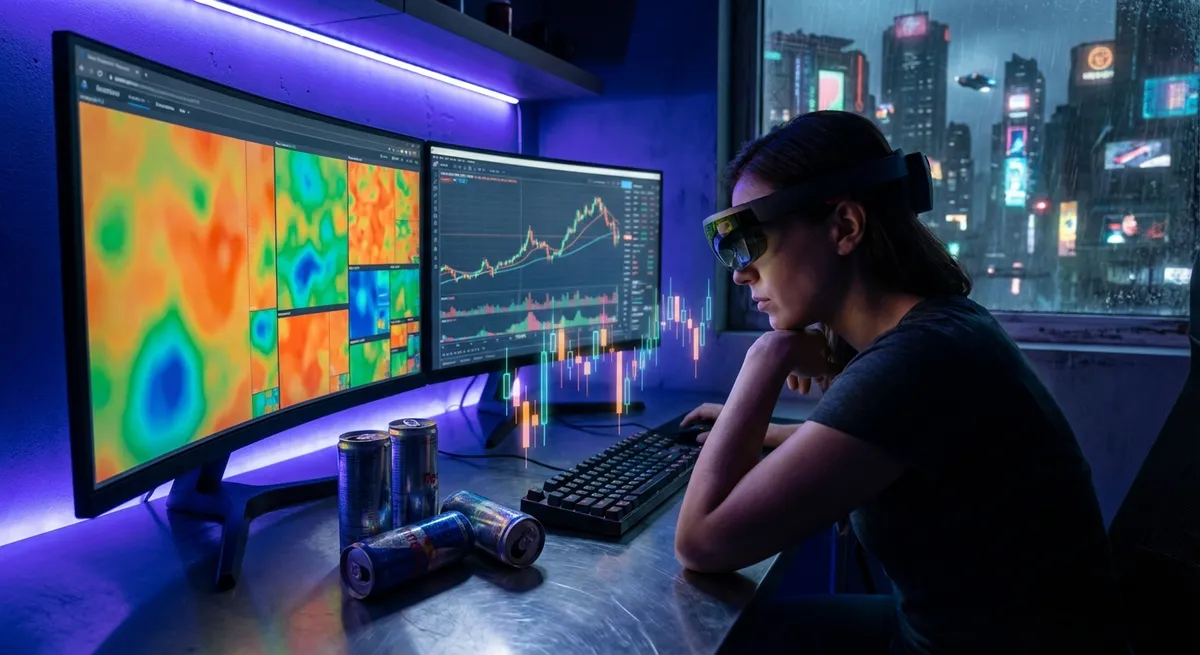
- Display heatmaps, correlation matrices, and sentiment in one glance
The secret sauce? Automation rules inside these dashboards. You can trigger alerts when:
- EUR/USD volatility spikes above your threshold
- Correlation between GBP/JPY and USD/JPY breaks your comfort zone
- Your total open risk hits a preset max
This isn’t “more data.” It’s controlled data—filtered to match your playbook so you react to what matters and ignore the noise. That’s the kind of screen traders screenshot and post when they finally feel “plugged in.”
2. AI-Powered Alerts: From Random Pings to Trade-Ready Signals
Alerts used to be basic: “Price hit X.” Now they’re going full AI-brain. Traders are layering machine learning tools on top of price data to get alerts that sound more like trade ideas than phone notifications.
Today’s smarter alert systems can:
- Recognize pattern clusters (double tops, breakouts, liquidity grabs)
- Flag volatility anomalies during normally quiet sessions
- Combine price action with macro catalysts—“EUR/USD breakout + ECB event in 30 min”
- Learn from your past behavior and highlight setups you tend to trade well
The key for shareability? These alerts are visual and explainable. Traders are posting screenshots of AI-annotated charts that show:
- “Why this move happened” (volume, news, liquidity zones)
- “What usually happens next” based on historical pattern data
- Confidence levels instead of fake “100% win rate” hype
Think of it as going from simple “doorbell rings” to a full butler that says: “Someone’s at the door, it’s the person you like, and here’s why you might want to answer now.”
3. Execution Engines: Latency Is the New Spread
The spread used to be the main battlefield. Now, for active traders, micro-latency and execution quality are just as critical. Tool stacks are evolving from “chart + broker” to “chart + smart router + execution analytics.”
Forex traders are increasingly tracking:
- Slippage per pair, per session, and per strategy
- Fill speed during news spikes vs. normal conditions
- Partial fills and re-quotes as a percentage of total trades
- “My average slippage on GBP news trades just dropped 40% after switching routing.”
Some platforms and add-ons now show execution stats right on your chart—turning every trade into data you can refine. Fast shareable insight:
Execution tools are also bringing in:
- One-click order templates with built-in risk per trade
- Conditional orders tied to both price and time (e.g., cancel if London close hits)
- Smart trailing stops that adapt to volatility instead of fixed pip distances
When traders say “my edge is in the details,” this is the detail layer they’re talking about—and flexing in chatrooms and on X.
4. Risk Lenses: Tools That Show You the Trade Behind the Trade
The most viral trading screenshots aren’t always winning trades—they’re insane risk dashboards that make people go, “Okay, I seriously need that.” Risk tools are finally getting the same glow-up that charts did.
Modern “risk lenses” let you see your portfolio in ways that actually change how you trade:
- Exposure by currency: “You think you’re diversified, but 80% of your risk is just USD.”
- Exposure by theme: “You’re basically trading one macro story 5 different ways.”
- Drawdown in real time vs. your maximum allowed drawdown
- Risk clustering: multiple trades all likely to move the same way on one data release
Some traders even run stress tests like:
- “What if the Fed surprise-hikes 50 bps?”
- “What if DXY dumps 1.5% in an hour?”
Risk tools simulate how your open positions would react—and that’s the stuff that gets clipped and posted: dramatic “what if” risk graphs that turn invisible danger into something you can actually see and adjust.
5. Collaboration Layers: Trading Tools Are Getting Social
FX used to be a solo sport: your charts, your notes, your trades. Now, top traders are embedding collaboration into their tools, not just into separate chat apps.
The newest wave of social-forward trading tools enable:
- Shared workspaces where teams can annotate the same EUR/USD chart live
- Strategy templates that can be cloned, tested, and modified by other traders
- Comment layers over news events—“here’s how I traded this NFP spike”
- Leaderboard-style analytics focused not on P&L but on discipline and risk metrics
What spreads fastest on social?
- Side-by-side screenshots of “before and after” strategy tweaks made by multiple traders
- Time-lapse replays of how a trading group navigated a wild session using one shared setup
- Transparent stats of win rate and average R:R, shared directly from analytics tools
Instead of vague “signals,” traders are sharing process—backed by real data and reusable setups. The tools that make that easy are the ones taking over timelines.
Conclusion
Forex trading tools are no longer just about prettier charts or more indicators. The new wave is about flow:
- Smart dashboards that compress chaos into clarity
- AI alerts that surface real opportunities, not noise
- Execution engines that protect your edge at the millisecond level
- Risk lenses that reveal what you’re really betting on
- Collaboration layers that turn solo grinding into shared strategy-building
If your current setup doesn’t help you react faster, risk smarter, and learn from every click, it’s not just outdated—it’s costing you.
Curate a lean, powerful stack. Track everything. Share what works. In this market, the traders with the sharpest tools don’t just survive volatility—they turn it into content, community, and compounding edge.
Sources
- Bank for International Settlements – Triennial Central Bank Survey - Authoritative data on global FX trading volumes and market structure
- CME Group – FX Futures & Options Education - Background on FX products, liquidity, and trading mechanics
- Investopedia – Forex Trading: A Beginner’s Guide - Overview of forex markets, participants, and common trading approaches
- U.S. Commodity Futures Trading Commission (CFTC) – Consumer Advisory on Forex Trading - Official guidance on forex trading risks and best practices
- MIT OpenCourseWare – Algorithmic Trading and Quantitative Strategies - Educational material on data-driven trading tools and execution strategies
Key Takeaway
The most important thing to remember from this article is that this information can change how you think about Trading Tools.