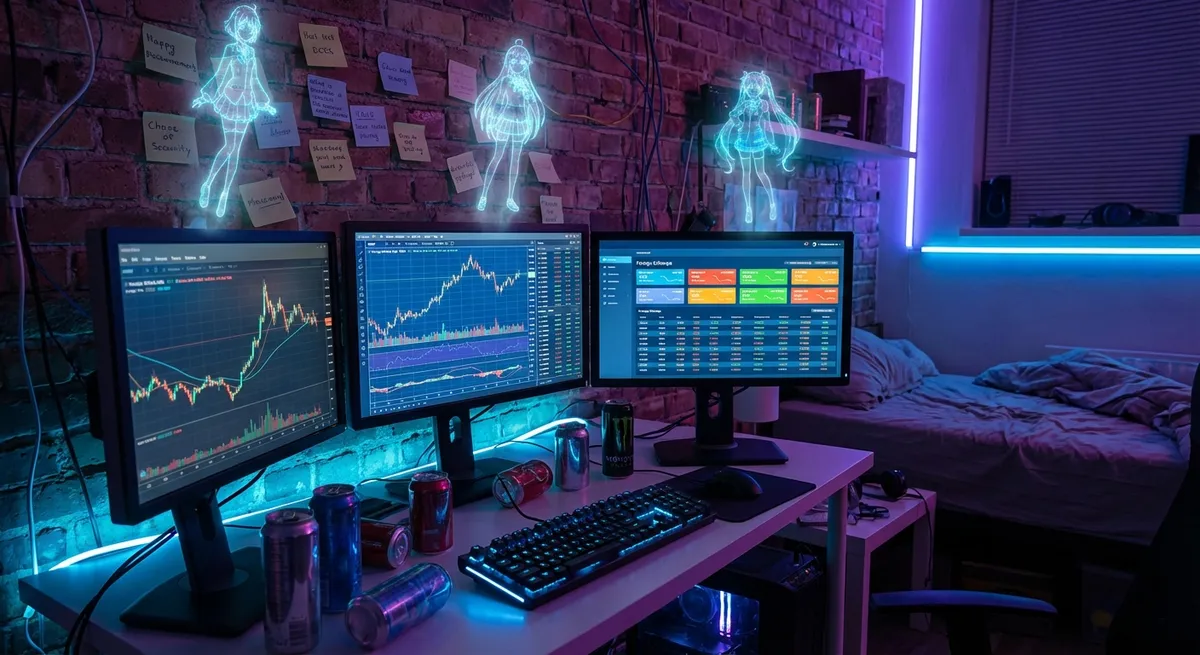
Trading feels a lot less scary when your tools are basically your squad. The right setup doesn’t just show you charts; it boosts your timing, filters your ideas, and keeps your emotions from wrecking your strategy. On Fore Qio, we’re all about that “plug in, level up, lock in” vibe—so let’s talk about the trading tools that are actually helping forex traders move smarter right now, not just adding more noise to their screens.
Below are 5 trending tool shifts FX traders are hyped about—and they’re built for sharing, debating, and flexing in your next trading group chat.
1. Session Heat Maps: Seeing Where the Real Action Is
Old-school watchlists just tell you what’s moving. Session heat maps show you where and when the market is actually alive.
Instead of staring at 20 charts, traders are using tools that color‑code volatility and volume across the Asian, London, and New York sessions. You can instantly see which pairs are “lit” and which are basically sleepwalking. That means less guessing and more targeted screen time—especially if you’re trading part‑time around work or school.
Layer this with your own strategy and you can spot sweet spots like: London breakout windows, New York reversals, or Asia’s range setups. These tools are trending because they turn the market from random chaos into a time‑structured playground. You’re no longer trading all day—you’re hunting in specific sessions where your edge actually shows up.
2. Smart Order Panels: One-Click Risk, Zero Hesitation
Risk management used to be the boring part. Now it’s the power move.
Smart order panels let you set your risk per trade in a single click—think “0.5%” or “1%” of your account—then automatically calculate position size, stop loss, and take profit. Some tools even show your potential gain/loss in your account currency before you hit buy or sell.
The reason these are trending? They kill hesitation. When the setup is there, you’re not fumbling with lot size math while the candle runs away without you. You know your risk, you know your worst-case loss, and you can execute fast and clean.
And here’s the real win: traders are sharing screenshots of these panels in their Discords and Telegrams to show how they keep every trade inside a consistent risk framework. It’s not just “look at my win”—it’s “look how I controlled the downside.”
3. Playbook Templates: Turning Ideas Into Repeatable Setups
Random entries are out. Playbook tools are in.
Instead of “I kinda felt this might move,” playbook-style tools let you define your A+ setups clearly: structure, confirmation, entry zone, invalidation level, and target logic. You save these as templates and tag live trades that match them. Over time, you see exactly which setup types print money and which ones are just vibes.
This is trending hard because it connects your journal to your execution. When a chart starts to match your playbook conditions, you already know how you’re supposed to handle it. No more in-the-moment improvisation that turns a clean plan into a messy emotional trade.
Plus, playbooks are insanely shareable. Traders are posting “My London Reversal Play” or “My NY Breakout Rule Set” online, basically turning their strategy into a visual card that others can analyze, test, or iterate on. It’s like trading memes, but with actual edge.
4. News Filters With Impact Scoring: Cutting the Noise, Catching the Shock
Economic calendars are old news. Smart news filters are the upgrade.
Instead of a giant wall of events, these tools rank news by potential impact, historical volatility, and relevance to each pair you trade. Some even let you filter by your style: scalpers care about short-term spikes; swing traders care about multi-day trend shifts.
Traders love these because they don’t want to read every headline—they want to know:
- Which events can blow up my current position?
- Which releases might launch a new trend?
- When should I step away and avoid the chop?
Combine that with real-time alerts and you’re not surprised when spreads widen or price whipsaws into a key event. You know when to back off, when to hedge, and when to step on the gas after the dust settles. That kind of clarity is screenshot gold, which is why you see traders posting their “no-trade news windows” and “post-news setup zones” all over social feeds.
5. Trade Review Dashboards: Turning Your History Into a Highlights Reel
The most powerful tool trend right now isn’t about entries—it’s about feedback.
Trade review dashboards plug into your trading platform, pull your history, and turn it into visuals you can’t ignore. Win rate by session, average R-multiple, performance by pair, drawdown behavior, streaks—basically your trading life, exposed in charts.
Here’s why this trend is sticking: it gives traders a reality check and a roadmap. You might discover you crush EUR/USD during London but bleed slowly on JPY crosses in Asia. Or that your second trade of the day is usually your worst. Once you see that, you can adapt your rules so your behavior matches your actual edge.
These dashboards are crazy shareable too. Traders post their monthly “performance tiles” like gym progress pics: not just flexing wins, but showing how their discipline and consistency are evolving. The narrative is shifting from “I caught 200 pips” to “I finally stuck to my plan for 30 days straight—and here’s the data to prove it.”
Conclusion
Trading tools used to just be indicators and fancy chart colors. Now they’re more like performance partners: timing your sessions, locking your risk, structuring your playbook, filtering your news, and holding up a mirror to your habits.
If you’re serious about leveling up, don’t chase every new indicator that hits your feed. Focus on tools that:
- Save you time
- Reduce emotional decisions
- Make your edge measurable and repeatable
That’s the new flex in modern FX: not just sharp entries, but a sharp workflow. Turn your tools into your squad, and you’re not trading alone anymore—you’re trading with structure on your side.
Sources
- Bank for International Settlements – Triennial Central Bank Survey - Authoritative data on global FX trading volumes and market structure
- CFTC – Commitments of Traders (COT) Reports - Official positioning data that many trading tools and dashboards incorporate
- Investopedia – Risk Management in Trading - Overview of core risk concepts that smart order and position-sizing tools operationalize
- Babypips – The Forex Factory News Calendar Guide - Practical explanation of economic calendars and news impact for FX traders
- CME Group – Economic Events & Calendar - Professional-grade reference for market-moving macro events often integrated into news-filtering tools
Key Takeaway
The most important thing to remember from this article is that this information can change how you think about Trading Tools.