If your FX charts still look like they did in 2019, you’re leaving edge on the table. Today’s trading tools aren’t just “nice to have” add-ons—they’re the difference between FOMO entries and laser-focused setups you actually want to brag about in the group chat.
This is your fast-pass tour through the trading tools and trends forex traders can’t stop screenshotting, screen-recording, and sending to their friends. Buckle up—your chart is about to glow up.
Trading Dashboards Are Becoming “Command Centers”
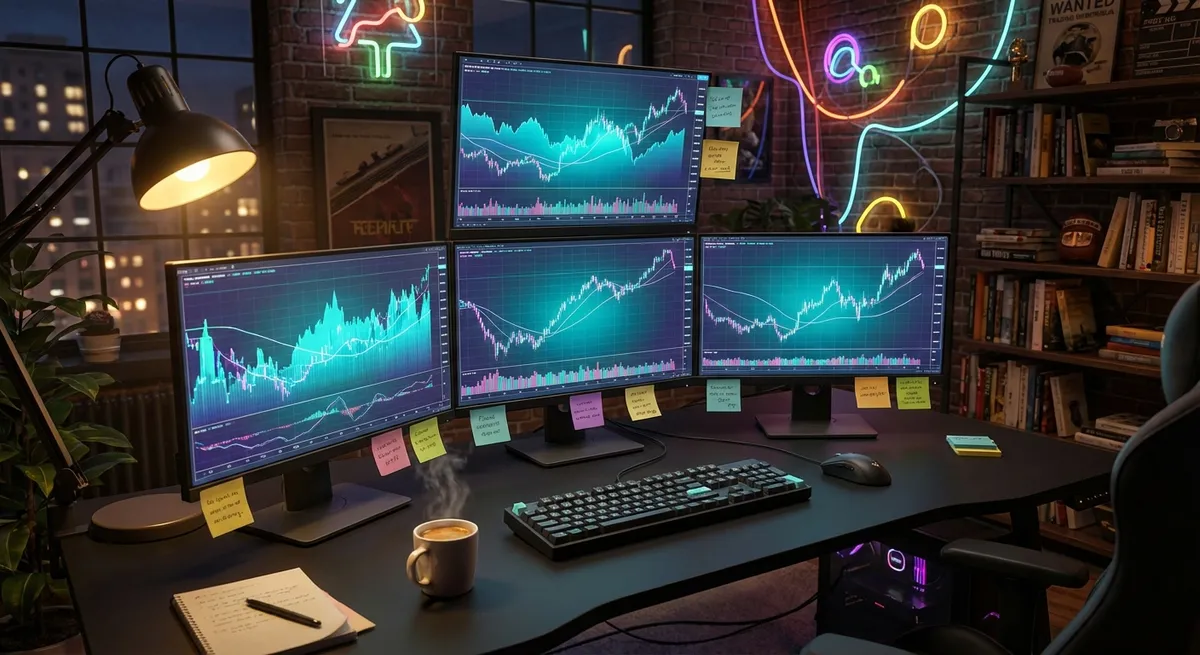
The classic single-chart setup is getting benched. Traders are shifting to full-blown command centers—dashboards that pull together everything that matters into one clean, scrollable view.
Instead of jumping between five tabs and three brokers, modern dashboards let you line up watchlists, economic calendars, correlation heatmaps, and sentiment gauges side-by-side. The trend is all about fewer clicks, faster context. That means spotting when a dollar move is lining up across DXY, EUR/USD, and gold before the candles even get dramatic.
Cloud-based dashboards also mean your layout follows you—phone, tablet, laptop—so you can adjust stops from a café instead of panic-tapping your broker’s app. And as more platforms add widgets and custom modules, traders are sharing screenshots of their “perfect layout” like it’s a gaming setup flex. The vibe: less chaos, more cockpit.
AI-Powered Chart Assistants Are the New “Second Pair of Eyes”
AI isn’t replacing traders, but it’s absolutely replacing guesswork. The new wave of chart assistants sits quietly in the background and then taps you on the shoulder when something matches your playbook.
Think: automatic pattern spotting (flags, wedges, double tops), probability-based scenario mapping, and real-time anomaly alerts when volatility or volume goes off-script. Instead of you hunting for setups, tools flag pairs that match your risk, style, and time preference.
Some AI tools even translate raw data into plain language summaries—“EUR/USD is holding above key support with rising momentum, watch 1.0900–1.0950”—so you’re not glued to candlesticks 24/7. Traders love sharing clips of AI vs. human chart calls, especially when the bot catches a clean move while they were doom-scrolling something else.
The real flex isn’t letting AI trade for you—it’s using it to filter noise, highlight structure, and give you a cleaner decision window.
On-Chart Risk Tools Are Making “Winging It” Uncool
The era of “I’ll just eyeball this stop-loss” is getting roasted—hard. Traders are gravitating toward tools that put risk front and center on the chart, not buried in a calculator or hidden under a tab.
On-chart position sizing tools let you drag your stop and target with your mouse or finger and immediately see: lot size, pip risk, dollar risk, and reward-to-risk ratio in real time. No math, no spreadsheet, no “I think that’s about 1%.” Just clean numbers that update as you move your levels.
Overlay tools that map daily ATR (Average True Range), volatility zones, and previous session highs/lows are also trending. Why? Because they keep traders from dropping stops directly inside obvious liquidity pools or tiny noise ranges. It’s become way more common to see people post trade recaps that include a risk map screenshot, not just the entry and exit.
The culture shift is clear: raw profit screenshots are out; risk-disciplined setups that still win are in.
Mobile-Friendly Tools Are Turning “Dead Time” Into Chart Time
Traders don’t want to be chained to dual monitors just to stay in sync with the market. Mobile-first and cross-device tools are exploding, especially for swing and intraday traders who have jobs, classes, or lives outside the charts.
Push-based alerts tied to your actual chart drawings are huge: trendline breaks, zone touches, indicator crosses—sent straight to your phone. No more staring at price inching toward your level; you set the trap, then live your life.
Session-based notifications (London open, New York overlap, key news releases) paired with economic calendar integrations are making it easier to plan your trading around your day, not the other way around. Traders are sharing home screen setups like “New York scalp mode” with widgets for dollar index, spreads, and spreads widening alerts.
The more frictionless mobile tools get, the more realistic it becomes to run a serious trading routine without living in a trading cave.
Trade Journals Are Turning Into Performance Dashboards
The old “trading journal” as a dusty spreadsheet is getting a full makeover—and it’s one of the most share-worthy tool trends right now. Smart journaling apps now plug directly into your broker or platform, pull your trades, and auto-tag everything in the background.
Instead of manually logging win/loss, you get breakdowns like: win rate by session, by pair, by day of week, by pattern, by R-multiple, even by whether you followed your rules. That kind of feedback loop is pure gold when you’re trying to level up from random green days to consistent execution.
Visual analytics (heatmaps, equity curves, drawdown charts, distribution graphs) turn your entire trading history into a story you can see—and improve. Traders are posting before/after screenshots of their performance dashboards after tightening rules, cutting bad pairs, or dropping revenge trades.
Journaling isn’t just “being disciplined” anymore; it’s a data-driven flex. You’re not just trading the market—you’re trading yourself better every month.
Conclusion
Forex tools used to be a side quest. Now they’re the whole meta. Dashboards are turning charts into command centers, AI is trimming the noise, mobile tools are syncing with real life, on-chart risk tools are making discipline feel natural, and next-gen journals are giving traders brutally honest feedback in real time.
You don’t need every shiny gadget. But if your setup isn’t helping you see cleaner, decide faster, and review smarter, you’re playing the 2026 game with 2016 gear.
Upgrade the tools, upgrade the trader. Your next screenshot-worthy trade might just come from the way you set up your screen.
Sources
- MetaTrader Official Site - Overview of widely used retail trading platforms and tools in forex
- TradingView Features - Details on modern charting, alerts, and social-sharing tools popular with traders
- Investopedia: Forex Trading Tools - Background on common forex tools and why traders use them
- Babypips: How to Keep a Trading Journal - Practical guide to journaling and performance tracking for FX traders
- CFTC Forex Trading Resources - U.S. regulator guidance on forex trading, risk, and tools to trade more safely
Key Takeaway
The most important thing to remember from this article is that this information can change how you think about Trading Tools.